

Toddler Shoes: What to Look for as Kids Start Walking
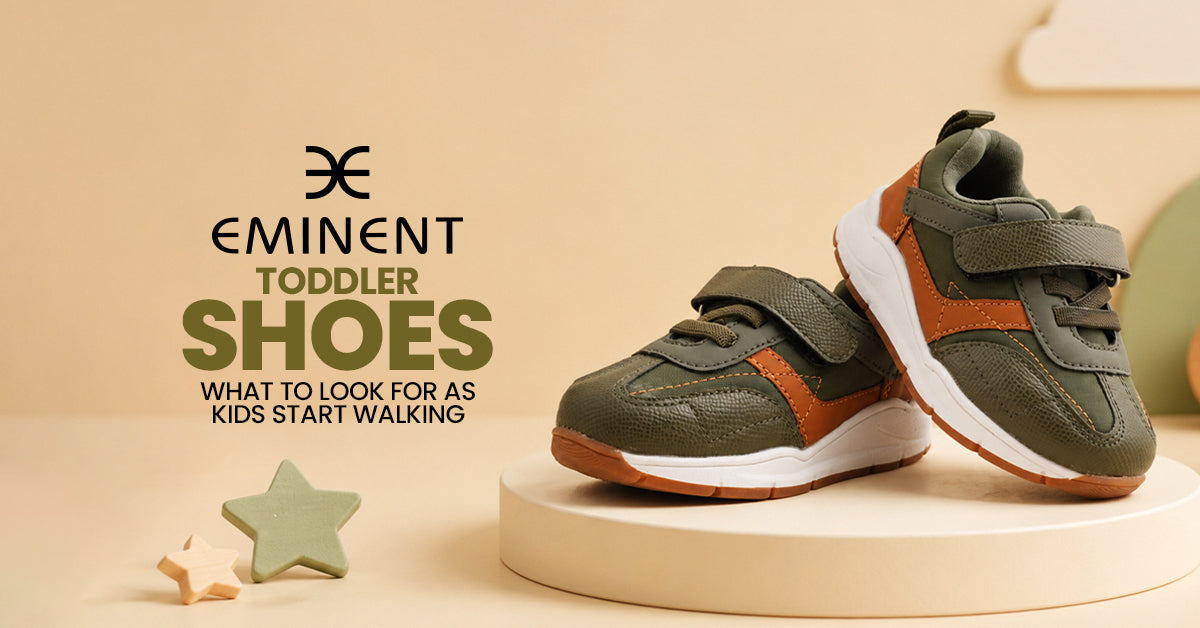
Toddler Shoes: What to Look for as Kids Start Walking
As toddlers start walking, shoes need to prioritise flexibility, secure fit, and breathability over anything else. Eminent's boys' and girls' footwear ranges start from the smallest sizes, around 20 and 21, in sandals, casual shoes, and slippers, covering early walkers as they take their first steps. This guide covers what actually matters in a toddler's first shoes and how to choose the right pair.
Why a Toddler's First Shoes Are Different From Any Other Kid's Shoe
A child learning to walk needs shoes that support this new skill rather than get in the way of it. Feet are still developing, balance is unsteady, and a shoe that's too stiff, too heavy, or doesn't fit properly can genuinely make those early steps harder rather than easier. This is different from buying shoes for an older child who's already walking confidently, where style and durability often take priority over the more foundational fit concerns that matter most for new walkers.
Shop the Range: Browse Eminent's Boys Shoes and Girls Shoes collections, both starting from toddler sizing.
What Actually Matters in a Toddler's First Shoes
A flexible sole. Rigid soles restrict the natural movement toddlers need as they figure out balance and coordination. A sole that bends easily with the foot supports this development far better than a stiff one.
A secure, adjustable fit. Straps, velcro closures, or laces that can be properly tightened keep a shoe from slipping off mid-step, which matters enormously for a toddler who's still working out how to walk confidently.
Breathable materials. Small feet sweat just as much as adult feet, and a breathable upper helps avoid discomfort, particularly in Pakistan's warmer months.
Room to grow, without excess space. A shoe that's too snug restricts natural foot movement and growth, while one that's too loose makes it harder to walk steadily. A small amount of extra room at the toe, rather than a lot, is the right balance.
Lightweight construction. Heavier shoes tire small legs faster and can affect how naturally a toddler moves. A lighter shoe supports movement rather than working against it.
Choosing Between Sandals, Slippers, and Closed Shoes for New Walkers
Sandals with secure straps. These work well for warmer weather and indoor-to-outdoor movement, as long as the strap holds the foot securely rather than allowing it to slide forward.
Slippers. Best suited to indoor use, offering a soft, flexible fit for early steps around the house, though they generally lack the support needed for outdoor walking on uneven ground.
Closed casual shoes or sneakers. These offer the most protection for outdoor walking and playtime, particularly once a toddler is walking more confidently and covering more ground.
For the very earliest walking stage, indoors especially, a softer, more flexible shoe or even supervised barefoot time can support natural foot development better than a structured shoe, since barefoot movement helps toddlers build balance and strength in the feet themselves.
Getting the Fit Right
Measure feet regularly. Toddler feet grow quickly, often needing a size change every few months, so checking fit regularly rather than assuming last season's size still works avoids a shoe that's become too tight without anyone noticing.
Check for a thumb's width of space at the toe. This gives enough room for growth without being so loose that it affects how a toddler walks.
Try shoes on with the socks they'll actually wear. Sock thickness can meaningfully change how a shoe fits, so testing with typical daily socks avoids a fit that feels different once actually worn regularly.
Watch how your toddler walks in new shoes. Stumbling more than usual, or reluctance to walk in a new pair, can be a sign the fit isn't quite right, even if the size seems correct on paper.
Signs It's Time for a New Size
Redness or marks on the feet after wearing. This usually points to a shoe that's become too tight in a specific spot.
Toes curling or pressing against the front of the shoe. A clear sign there's no longer enough room to grow.
Reluctance to wear a previously comfortable pair. Toddlers can't always explain shoe discomfort verbally, so a sudden reluctance to wear a specific pair is worth checking against actual fit.
Supporting Confident First Steps
The right toddler shoe supports a child's natural walking development rather than working against it. Prioritising flexibility, secure fit, and breathability over style alone, especially in these early stages, helps toddlers build the balance and confidence that carries them through into more active walking and running as they grow.
Shop Now: Explore Eminent's Boys Shoes and Girls Shoes collections, with sizing that covers toddlers through to older kids, and fast delivery across Pakistan.


Please upload banner from store admin blog pages
Frequently Asked Questions
Find answers to common questions about our products and services.