

Bra Size: Signs You Are Wearing the Wrong One
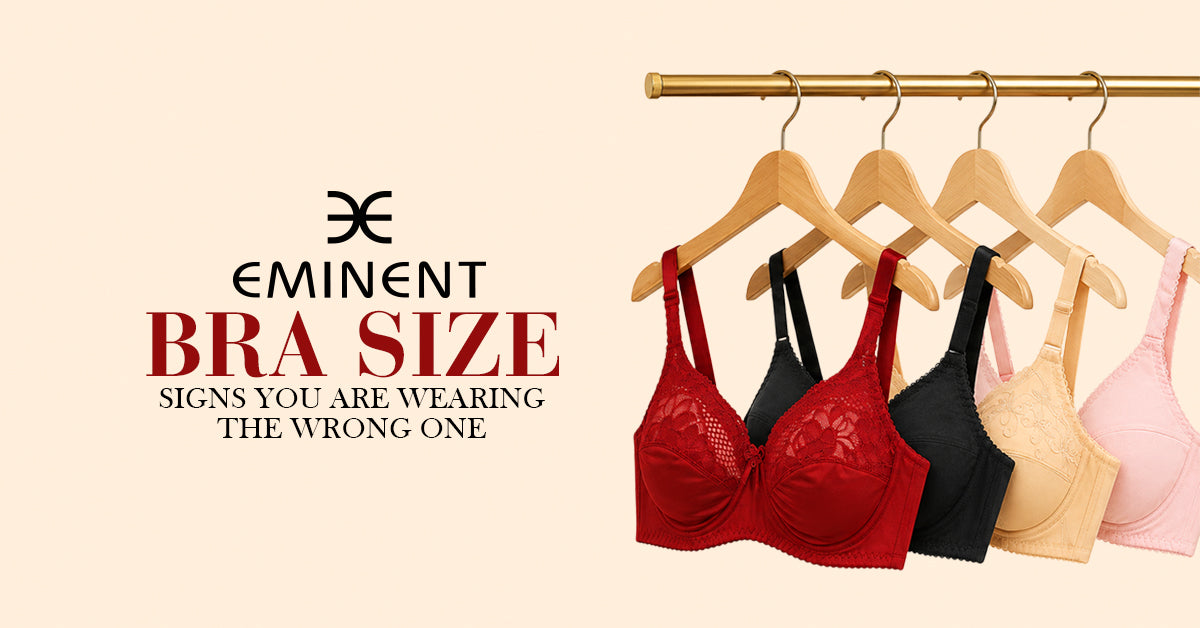
Most women are wearing the wrong size, and almost none of them know it. Not because they are careless, but because the discomfort creeps in so gradually that it starts to feel normal. Shoulder grooves become a fact of life. Adjusting the band through the day becomes a habit. The truth is that a well-fitted bra should be something you forget you are wearing, and if you are aware of yours by lunchtime, the size is off. Here are the signs to look for, what each one actually means, and how to fix it. Browse our intimates range as you read. Start with the band.
A correctly fitted band does around 80 percent of the support work, not the straps.
If you are constantly tightening your straps, your band is too loose.
The Six Clear Signs
Run through these honestly. Two or more means it is time to remeasure.
|
Sign |
What It Means |
The Fix |
|
Band rides up at the back |
Band too loose |
Go down a band size |
|
Straps dig into shoulders |
Band not supporting |
Tighten band, loosen straps |
|
Cups gape or wrinkle |
Cup too large |
Go down a cup size |
|
Spillage over the top or sides |
Cup too small |
Go up a cup size |
|
Underwire sits on the breast |
Cup too small |
Go up a cup size |
|
Red marks that last hours |
Band or cup too tight |
Go up one, adjust the other |
Your Band Is the Problem More Often Than Your Cup
This is the single most useful thing to understand about bra fit.
The band, not the straps, provides most of your support. It should sit level all the way around, parallel to the floor, and stay put when you raise your arms. If it slides up your back as the day goes on, it is too loose, and your shoulders are compensating for it.
That compensation is exactly what causes the digging. Women respond by tightening the straps, which makes the grooves deeper without fixing anything. Loosen the straps and go down a band size instead. It feels counterintuitive and it works.
A new bra should fit comfortably on the loosest hook. As the elastic relaxes over months of wear, you move inward through the hooks. Starting on the tightest hook means you have nowhere to go.
When the Cups Are Wrong
Cup problems are easier to spot but often misdiagnosed.
Gaping or wrinkling at the top means the cup is too big. Fabric that has nothing to hold folds. If it happens only in certain positions, the shape may be wrong for you rather than the size.
Spillage over the top or at the underarm means the cup is too small. So does an underwire that sits on breast tissue rather than against your ribcage. The wire should trace the natural crease underneath, and if it is resting anywhere else, the cup cannot do its job.
What Is Sister Sizing?
This is where most fitting rooms lose people, and it is simpler than it sounds.
Cup size is not fixed. It is relative to the band. When you change the band, the cup volume changes with it, so you have to adjust the letter to keep the same cup size.
Go down a band size, go up a cup letter. Go up a band size, go down a cup letter. So if a 36B feels loose around your ribs but the cups are right, your sister size is 34C. The cup volume is identical. Only the band has tightened.
Try the sister size before assuming the whole style is wrong for you. It solves more fit problems than anything else.
How to Check Your Size at Home
You need a soft measuring tape and a mirror, and five minutes.
Measure your underbust first, snugly around your ribcage directly beneath the bust, keeping the tape level and parallel to the floor. That number is your band size. Then measure the fullest part of your bust, loosely this time, without compressing anything. The difference between the two measurements gives you your cup size, roughly one inch of difference per cup letter.
Do this wearing a non padded bra, standing straight, breathing normally. And repeat it every six to twelve months, since weight changes, pregnancy, and simple time all shift the numbers.
Why It Changes
Your size is not permanent, which is why the bra that fit perfectly two years ago may not now.
Weight fluctuation is the obvious one, but it is not the only cause. Pregnancy and breastfeeding change both band and cup, sometimes significantly. Elastic in the band relaxes with wear and washing, so an old bra genuinely fits differently than it did new. And sizing varies between brands, which is why your size in one label is not automatically your size in another.
Rotate between at least three bras rather than wearing one repeatedly. Elastic needs a day to recover, and rotation roughly doubles the life of each.
Common Fitting Mistakes
Tightening the Straps to Fix Sagging: It transfers the load to your shoulders instead of solving the band problem.
- Buying on the Tightest Hook: Leaves no room as the elastic relaxes over the following months.
- Assuming One Size Across Brands: Sizing varies. Measure or try before you commit.
- Never Remeasuring: Most women wear a size they were fitted for years ago.
- Wearing the Same Bra Daily: The elastic never recovers, and the band loosens far faster. Machine Washing on a Hot Cycle: Heat destroys elastic. Hand wash or use a cold gentle cycle.
Key Takeaways
- The band provides most of the support, not the straps.
- Digging straps almost always mean the band is too loose.
- Gaping cups mean too large; spillage means too small.
- Sister sizing solves many fit problems without changing style.
- Remeasure every six to twelve months and rotate a minimum of three bras.
Time for a proper fit? Explore our intimates collection and start with your band measurement.


Please upload banner from store admin blog pages
Frequently Asked Questions
Find answers to common questions about our products and services.