

Face Serums: What Each Type Actually Does
Four bottles, four long ingredient names, and a shop assistant who says all of them are good for your skin. That is usually the point where people give up and buy whichever one has the nicest packaging.
Which is a shame, because serums are the most precise product in any routine. One brightens. One calms oil. One hydrates. One clears breakouts. You do not need all four, and using them wrongly can leave your skin worse off than before you started.
Here is what each one in our serum range actually does, and how to work out which is yours.
What a Face Serum Actually Is
A serum is a lightweight, concentrated treatment that goes on after cleansing and before moisturiser. The molecules are smaller than those in a cream, so the active ingredient sits closer to the skin instead of resting on top of it.
That concentration is the whole point. A moisturiser is a general product doing a general job. A serum is targeted, which is why the ingredient on the label matters far more than the name on the bottle.
A serum does not replace your moisturiser. It goes underneath it.
How the Four Types Compare
|
Serum |
Main Job |
Best For |
When to Use |
|
Vitamin C |
Brightening, evening tone |
Dullness, dark spots |
Morning |
|
Niacinamide |
Oil control, pore refining |
Oily, combination skin |
Morning or night |
|
Hyaluronic Acid |
Hydration |
Dry, dehydrated skin |
Morning and night |
|
Salicylic Acid |
Unclogging pores |
Acne, blackheads |
Night, 2 to 3 times weekly |
Vitamin C: For Dullness and Dark Spots
If your complaint is that your skin looks tired rather than oily or dry, this is your serum.
Vitamin C works as an antioxidant, defending against the pollution and sun exposure that cause dullness and pigmentation in the first place. Over several weeks, it also helps fade the marks already there, though that is slow, patient work rather than an overnight change.
Use it in the morning. Its protective effect pairs naturally with sunscreen, and the two together do more than either alone. Our Clear Glow Vitamin C Serum sits in this space.
Best for: dull skin, uneven tone, and pigmentation from sun exposure.
Niacinamide: For Oil and Large Pores
This is the most versatile serum of the four, and the safest place to start if you have no idea what your skin needs.
Niacinamide regulates oil production, refines how pores look, strengthens the skin barrier, and calms redness. For anyone whose T-zone is shining by midday in Karachi humidity, this is usually the answer.
It is also one of the gentlest actives available, which means it rarely causes the stinging or flaking that vitamin C and acids sometimes do. Our Pure Radiance Niacinamide Serum works morning or night and layers comfortably with almost everything.
Best for: oily and combination skin, visible pores, and skin that reacts badly to stronger actives.
Hyaluronic Acid: For Hydration
Despite the name, this is not an exfoliating acid. It is a humectant, which means it pulls water into the upper layers of your skin and holds it there.
That matters because of a skin type most people misdiagnose. You can have oily skin that is also dehydrated. It shows up as skin that feels tight and looks dull while still producing plenty of oil, and reaching for a heavier cream usually makes it worse.
One thing to get right: apply the Hydra Boost Hyaluronic Acid Serum to slightly damp skin and follow immediately with moisturiser. On bone dry skin in dry weather, a humectant can pull moisture out rather than in.
Best for: dry skin, dehydrated skin, air-conditioned offices, and winter months.
Salicylic Acid: For Acne and Blackheads
Salicylic acid is oil soluble, and that single property is what makes it different from every other exfoliant. It gets inside the pore and clears the buildup causing blackheads, rather than only working across the surface.
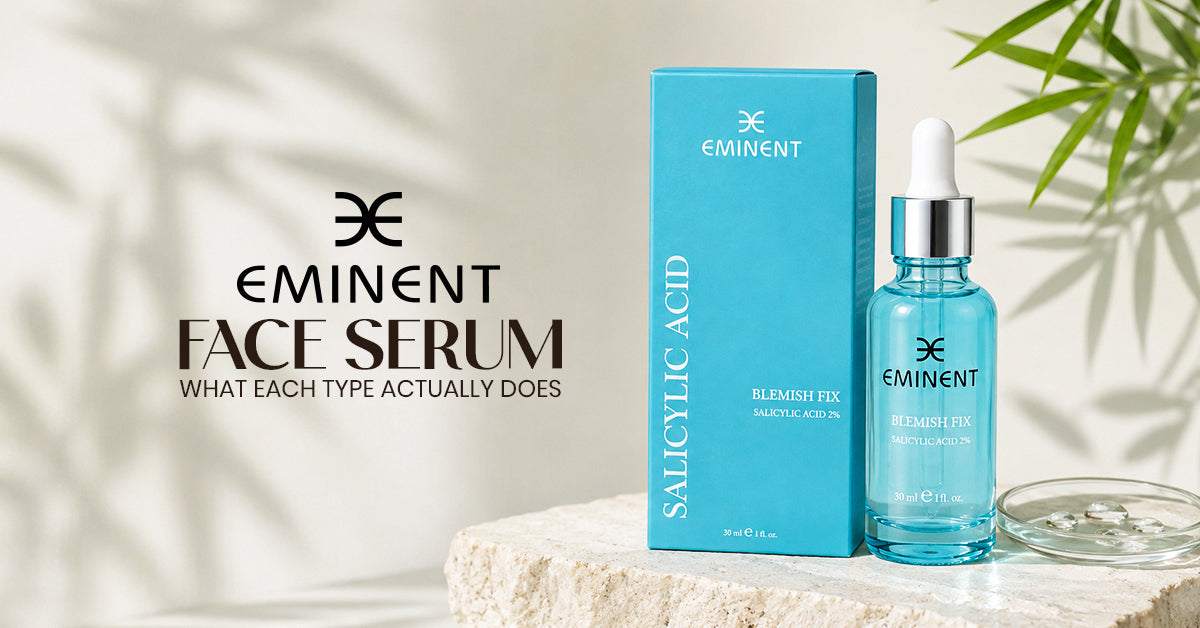
That makes it the right pick for congestion around the nose and chin, and for skin that breaks out on a predictable cycle. Our Blemish Fix Salicylic Acid Serum is the targeted option.
Start with two or three nights a week, not daily. Overusing acids strips the barrier, and stripped skin responds by getting redder, tighter, and oilier than it was to begin with.
Best for: acne prone skin, blackheads, and congestion.
So Which One Is Yours?
|
Your Main Concern |
Choose |
Use When |
|
Dull, tired looking skin |
Vitamin C |
Morning |
|
Shiny by midday |
Niacinamide |
Morning or night |
|
Tight, flaky, dehydrated |
Hyaluronic acid |
Morning and night |
|
Regular breakouts |
Salicylic acid |
Night, 2 to 3 times weekly |
|
Large visible pores |
Niacinamide |
Morning or night |
|
Dark spots and marks |
Vitamin C |
Morning |
|
No idea where to start |
Niacinamide |
Gentlest, most versatile |
If you only buy one, make it niacinamide. It suits the widest range of skin and almost never causes trouble.
How to Layer Them Properly
The order is simple. Cleanse, serum, moisturiser, then sunscreen if it is morning.
Apply to clean skin and give it a minute to absorb before your moisturiser goes on. Two or three drops covers the whole face. More does not work harder, it just runs down your neck.
Using two serums? Thinner one first, so hyaluronic acid before niacinamide. And keep vitamin C and salicylic acid apart. Both are actives, and together they irritate more often than they help. Vitamin C in the morning, acid at night, is the safer arrangement.
Introduce one new serum at a time and give it two weeks. Start three at once and your skin reacts, and you will have no idea which one to blame.
Key Takeaways
- Vitamin C brightens, niacinamide controls oil, hyaluronic acid hydrates, salicylic acid clears pores.
- Niacinamide is the safest starting point for most skin types.
- Serum goes after cleansing and before moisturiser, two or three drops.
- Vitamin C in the morning, acids at night. Not together.
- Give any new serum four to eight weeks before deciding it does not work.
Ready to pick one? Browse our full serum range and start with the one that matches your main concern.


Please upload banner from store admin blog pages
Frequently Asked Questions
Find answers to common questions about our products and services.