

Are Insoles Worth It? How Eminent Insoles Help Your Feet
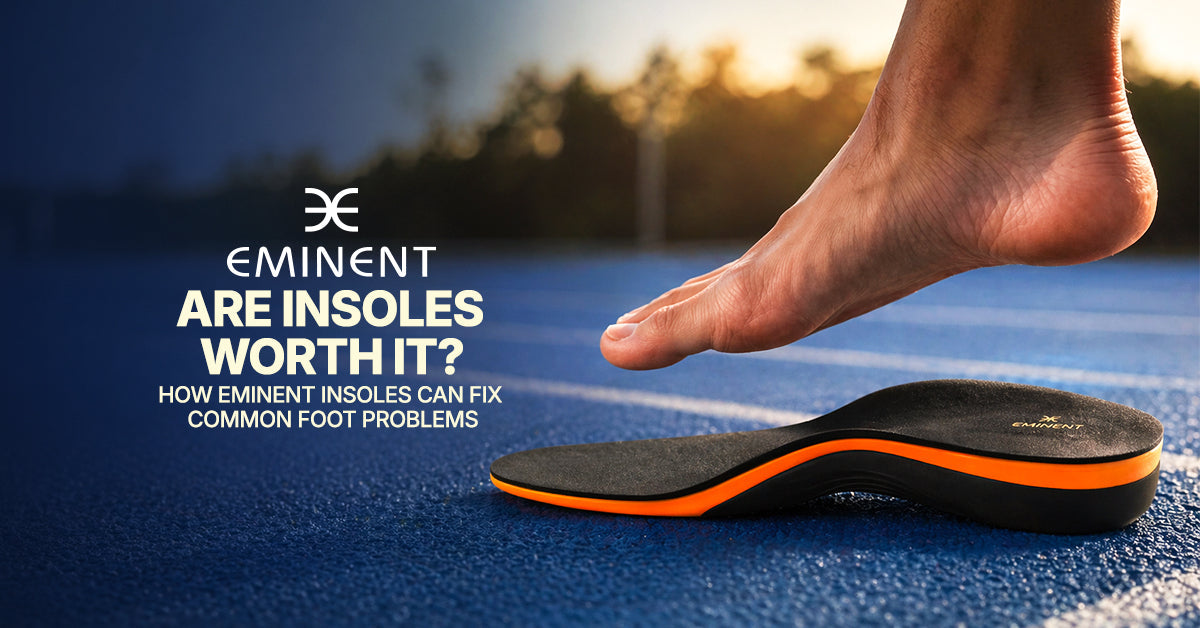
Are Insoles Worth It? How Eminent Insoles Help Your Feet
Long day at the office. You get home, sit down, and the first thing you do is pull your shoes off. Not to relax — because your feet are killing you.
The shoes were fine. Right size, nothing wrong with them. But your heels were sore by noon and by the time you got home, your feet felt like they had carried twice your weight.
Most people just accept this. They think sore feet come with the territory — with standing, with walking, with wearing formal shoes. A lot of the time though, the problem is not the shoe itself. It is what is inside it. Or more accurately, what is not inside it.
That missing support can lead to pressure points, heel pain, and constant discomfort throughout the day. This is where a simple upgrade makes a real difference.
Eminent Insoles are designed to change how your shoes feel from the inside. They add cushioning, improve support, and help distribute pressure more evenly across your feet — so long hours don’t feel as exhausting.
Whether you are on your feet all day or just want more comfort in your daily wear, a good insole can completely change your experience.
So — Are Insoles Actually Worth It?
For most people, yes. If your feet regularly hurt or feel heavy by the end of the day, a decent insole will make a big difference. It changes how your foot sits inside the shoe, where pressure lands, and how much your arch has to work just to keep you upright through the day.
It is not a medical fix, and it will not sort out a serious foot condition. But as a daily comfort thing — something you slip into your shoe and forget about — it does what it promises for most people who try it.
What the Standard Insole in Your Shoe Is Actually Doing
Not much, honestly.
The insole that comes with most shoes — especially formal ones — is thin, flat foam. It is there to fill the space and feel decent when you first try the shoe on. Within a few weeks of regular wear it flattens out and stops doing anything useful. At that point you are essentially walking on the inside of a shoe shell.
A proper insole is shaped differently. It has a raised section under the arch, more padding under the heel, and it keeps your foot in a position that does not require your muscles to constantly compensate. You do not feel an immediate dramatic change when you put one in. But after a full day, the difference in how your feet feel is usually obvious.
The Things People Actually Come to Us About
- Heel pain. The most common one. Every step lands hardest on your heel, and if there is nothing absorbing that impact, it builds up over hours. An insole with a cushioned heel section spreads that load so it is not all hitting one spot.
- Flat feet. If your arch touches or nearly touches the ground when you stand, your foot is not getting the support it needs from a standard flat insole. This tends to show up as pain in the foot, the ankle, sometimes even the knee. An insole with arch support gives your foot a base that actually matches its shape.
- Feet that are just exhausted by 3pm. This is not really pain — more like a heavy, worn-out feeling. It usually means the foot is working harder than it should because it has no proper base. Spreading the pressure more evenly across the foot takes a lot of that effort away.
- Shoes that fit your length but feel wrong. Sometimes the shoe is slightly too wide, or the footbed is just hard and flat. An insole corrects the interior fit without you needing new shoes.
Who Actually Needs One
If you are on your feet for most of your working day — doctors, teachers, retail staff, anyone going through a long shift — you should probably have a decent insole in your shoes. The same goes for people who wear formal shoes every day, because formal footwear almost never has real cushioning built in.
If you have flat feet or unusually high arches, an insole is less of an optional upgrade and more of a basic necessity for comfortable daily wear.
If your feet feel fine, you probably do not need one. But if you are regularly reaching for them when you get home, it is worth trying before assuming it is just how shoes work.
What We Built Our Insoles For
We added insoles to what we offer at Eminent because we kept hearing the same thing — customers who loved the shoes but said their feet were done by the afternoon.
Our insoles are made for the kind of day most people in Pakistan actually have. Long hours, hard floors, shoes that look sharp but were not built with a 10-hour workday in mind. They sit cleanly inside the shoe without adding visible bulk, they do not shift around, and they hold their shape through regular daily use rather than flattening out after a month.
They work in Eminent footwear but also fit well in most standard shoes from other brands — formal, casual, sneakers — so you are not locked into using them one way.
Have a look at what we have: Eminent Insoles Collection
If You Are Comparing Insoles — What to Actually Check
There is a lot of variation between insoles that look similar. The things that actually matter:
- Does it have a proper arch section? A flat insole with no arch is just extra foam. The raised arch is what does most of the work.
- How is the heel cushioned? Look for a slightly denser, thicker section under the heel — not just uniform padding throughout.
- Will it hold its shape? Cheap foam compresses fast and stays flat. If it stops bouncing back within a few weeks, it has stopped working.
- Does it fit, or can it be trimmed? It should sit flat and not bunch up at the edges. Most good insoles can be cut down to fit different shoe sizes.
- Is the surface breathable? If you wear shoes all day, this matters more than people expect.
The Honest Take
Insoles are worth trying if your feet give you trouble regularly. They are not going to fix a real medical issue, and if you have persistent or serious foot pain, a doctor is the right call first. But for the everyday version of sore, tired, or poorly-supported feet — which is what most people are dealing with — a good insole is one of the simpler fixes out there.
We keep ours focused on daily wear because that is what most people actually need. Not specialist orthotics, not sports performance gear — just something that makes your shoes feel right through the whole day.
If that sounds like what you are after, start here: Eminent Shoe Insoles


Please upload banner from store admin blog pages
Frequently Asked Questions
Find answers to common questions about our products and services.