

Flat Feet Insoles vs Regular Insoles
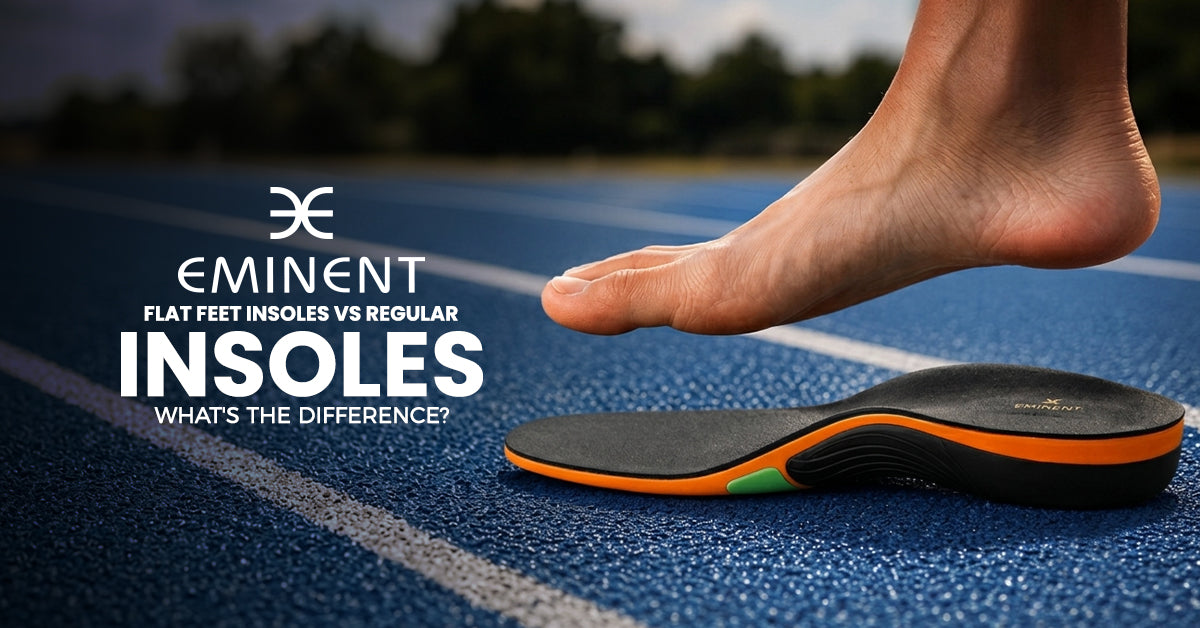
Flat Feet Insoles vs Regular Insoles: What's the Difference?
Regular insoles are mostly flat and soft. They add cushioning but little arch support. Flat feet insoles have a firm, raised arch bridge that stops your foot from rolling inward, spreads shock at the heel and ball, and reduces strain on your ankles, knees, and lower back. If your feet ache along the inner edge or your shoes wear out faster on the inside, you likely need flat feet insoles, not regular ones.
Step into Comfort: Tired of foot pain and flat arches? Discover the right support for your shoes by exploring the Insoles Collection at Eminent today!
Sore Feet Are More Common Than You Think
By the end of a long day, a lot of people feel it in their feet. They ache, they throb, and they feel worn out. This is even more common for people with flat feet, also called fallen arches. When your arch sits low or flat, your feet have to work harder with every step, and that tiredness spreads up your legs over time.
Many people reach for shoe inserts to fix this, and that is a smart move. But here is the catch: not all inserts are the same. Putting the wrong kind of insole in your shoes can actually make things worse. A soft, flat pad might feel nice for a minute, but it does nothing for an arch that needs real support. To pick the right one, you first need to understand how flat feet insoles and regular insoles are built differently. Let us break it down.
The True Value of Quality Support
Do shoe inserts really make a difference for daily walking and standing? Yes, but only if you use the right type. A good insole supports your foot in the spots that take the most pressure, so your muscles do not have to fight to keep you balanced. That means less aching at night and more comfort during the day.
The problem is that the pads your shoes come with rarely do this job well, because standard factory shoe pads rarely give your feet what they need. They are thin, flat, and meant to fill space, not support your arch. If you are still on the fence about trying them, learn more about how they work in our guide on Are Insoles Worth It: How Eminent Insoles Help Your Feet. Once you feel proper support under your arch, the difference is hard to ignore.
Flat Feet Insoles vs. Regular Insoles
On the shelf, these two can look similar. But they are built for very different jobs. Here is how they compare in the ways that matter.
Design and Structure
This is the biggest difference between the two.
- Regular insoles are mostly flat and soft. They are made mainly for cushioning and filling the shoe.
- Flat feet insoles have a firm, raised arch bridge built into them.
- That arch bridge stops your foot from rolling inward, which is known as overpronation.
- The shape supports your foot's natural curve instead of just sitting flat under it.
Shock Absorption
Both add some comfort, but they handle impact in different ways.
- Regular inserts give basic heel-to-toe comfort and a bit of soft padding.
- Flat feet versions focus on heavy shock distribution at the heel and the ball of the foot.
- These are the spots where flat-footed walkers put the most pressure with every step.
- Better shock spread means less pounding force traveling up your legs.
Rigidity vs. Flexibility
The firmness of the insole is what really sets them apart.
- Regular insoles are soft and squishy, which feels nice but offers no real structure.
- Soft foam collapses under your body weight, so a flat arch gets no help holding its shape.
- Flat feet insoles use structured, rigid or semi-rigid support that stays firm.
- This firmness holds your arch up all day instead of flattening out under pressure.
Targeted Relief
Think about what each one is actually trying to fix.
- Regular options are aimed at general foot tiredness and light cushioning.
- Flat feet models actively reduce strain on your ankles, knees, and lower back.
- By correcting how your foot lands, you ease problems more serious up the chain.
- This makes them a better pick for daily pain, not just end-of-day tiredness.
How to Know Which One You Need
Not sure which side you fall on? You can check at home with a simple test.
Try the wet footprint test. Wet the bottom of your foot, step onto a piece of cardboard or a dry floor, then look at the mark. If you see almost your entire sole printed with little to no curve missing on the inner edge, you likely have flat feet and need arch support.
There are other easy signs too. If your feet ache along the inside edge near the arch, that is a strong clue. Another giveaway is your shoes. If they wear out faster on the inner side of the sole than the outer side, your feet are rolling inward, and you need specialized flat feet insoles. General regular insoles will not solve that for you.
Walk Without Pain: Give your arches the structure and relief they deserve. Shop the full Eminent Insoles Collection now to find your perfect fit and enjoy fast delivery across Pakistan!


Please upload banner from store admin blog pages
Frequently Asked Questions
Find answers to common questions about our products and services.