

5 Common Causes of Heel Pain and How Insoles Help
5 Common Causes of Heel Pain and How Insoles Help
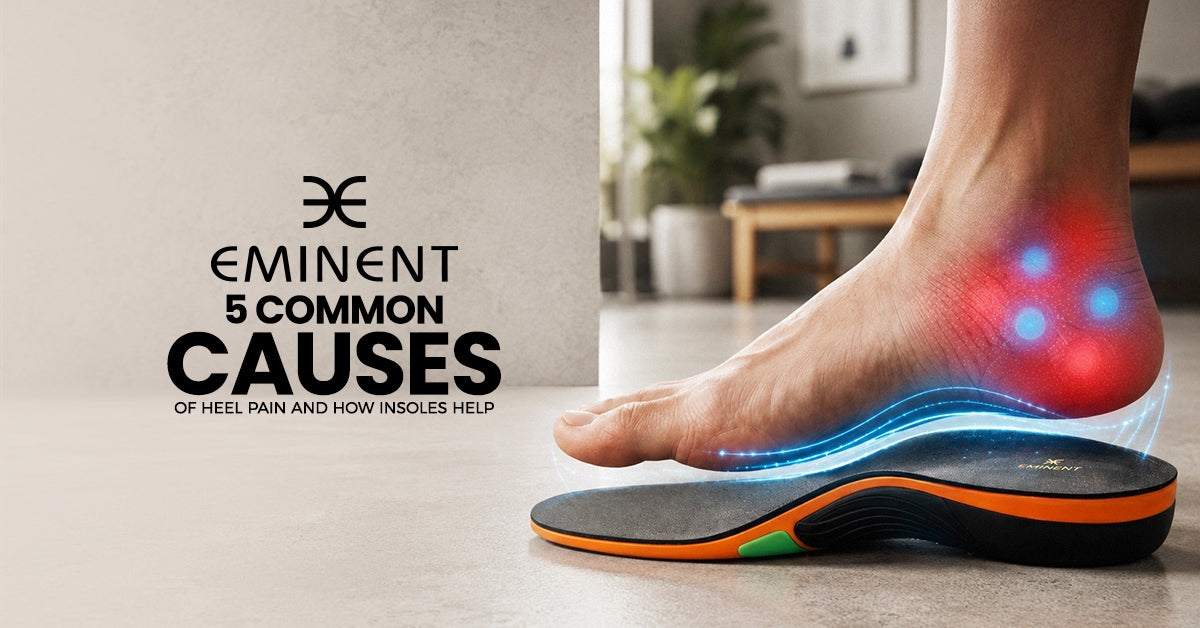
The five most common causes of heel pain are plantar fasciitis, heel spurs, overpronation from flat feet, Achilles tendonitis, and simple overuse on hard floors. The right insole helps by lifting and supporting the arch, cradling the heel in a deep cup, and absorbing shock before it reaches the bone. Eminent insoles are made to give your heels this support, so each step feels easier. If your pain is sharp, lasting, or getting worse, see a doctor as well.
Relieve Your Heel Pain: Tired of that sharp, stinging ache every time you take a step? Find immediate relief by exploring the Insoles Collection at Eminent today!
That First Painful Step in the Morning
You know the feeling. You wake up, swing your legs out of bed, and the second your foot touches the floor, a sharp pain shoots through your heel. For some people, it eases after a few steps. For others, it sticks around all day. Either way, it is a rough way to start the morning.
If this sounds like you, you are far from alone. Heel pain is one of the most common foot complaints out there. It hits people who stand for long hours on hard floors, like teachers, nurses, shopkeepers, and anyone on their feet all day. The pain can come from a few different causes, and most of them have one thing in common: not enough support under your feet.
The good news is that you often do not need surgery or strong medicine to feel better. A simple, non-invasive fix like a good pair of orthotic insoles can take a lot of that daily pressure off your heels. Let us look at what causes the pain first, then how insoles help.
How Good Support Actually Fixes Foot Pain
Most shoes are not built to protect the back of your foot. They look fine and feel okay in the store, but the thin sole inside does little to guard your heel against the impact of every step. When you walk on tiles, concrete, or pavement all day, that force has to go somewhere, and a lot of it lands right in your heel.
A quality insole steps in to soak up that impact, because standard footwear simply doesn't absorb the shock of hard pavements. If you want to dive deeper into how proper footwear padding protects your body, check out our guide on Are Insoles Worth It: How Eminent Insoles Help Your Feet. Once your feet get the cushioning and structure they are missing, the daily ache often starts to fade.
5 Common Causes of Heel Pain
Heel pain is not one single problem. Here are the five most common reasons your heels might hurt.
Plantar Fasciitis
This is the most common cause of heel pain by far.
- It is the swelling of the plantar fascia, the thick band of tissue running along the bottom of your foot.
- The pain is usually sharp and worst with your first steps in the morning.
- It often eases a little as you move, then comes back after rest.
- Standing for long hours tends to make it worse.
Heel Spurs
Sometimes the body reacts to constant strain by growing extra bone.
- A heel spur is a small bony growth on the underside of the heel bone.
- It forms from repeated strain on the muscles and ligaments around the heel.
- It often shows up alongside plantar fasciitis.
- The growth itself may not hurt, but the surrounding tissue can.
Overpronation (Flat Feet)
The way your foot rolls when you walk matters a lot.
- Overpronation means your feet roll too far inward with each step.
- This flattens the arch and stretches the tendons out of their normal shape.
- That stretching pulls hard on the heel and the tissue around it.
- Flat feet are a common reason heel pain keeps coming back.
Achilles Tendonitis
This one shows up at the back of the heel rather than the bottom.
- The Achilles tendon connects your calf muscles to your heel bone.
- Strain on this tendon causes pain and stiffness at the back of the heel.
- Poor foot alignment and tight calves often make it worse.
- It tends to flare up after activity or long periods of standing.
Simple Overuse and Poor Cushioning
Sometimes the cause is just too much pressure with too little padding.
- Standing all day on hard surfaces wears down the fat pad that cushions your heel.
- Thin, unpadded flats or stiff formal shoes offer almost no protection.
- Over time, this bruises the heel and leaves it sore.
- Less natural cushioning means more pain with every step.
How the Right Insoles Stop the Ache
A good insole is not just soft padding. It works in three clear ways to ease heel pain.
First, it lifts and supports your arch. This reduces the tension on the plantar fascia tissue, so that the band along the bottom of your foot is not constantly pulled tight. Second, it cradles your heel in a deep cup. This keeps your natural fat pad in place under the heel bone instead of letting it spread out, so you keep your built-in cushioning. Third, it absorbs the heavy shock of every step before that force reaches the bone. Instead of your heel taking the full impact on hard floors, the insole takes the hit first. Put together, these three actions give your heel the support, cushioning, and protection that regular shoes leave out.
Walk with Pure Comfort: Stop letting heel pain slow down your day. Restore comfort and protect your feet by ordering from the Eminent Insoles Collection now with fast cash on delivery across Pakistan!


Please upload banner from store admin blog pages
Frequently Asked Questions
Find answers to common questions about our products and services.